The Geometry of Learning: Understanding the School Plastic Ruler Triangle Vector Illustration in Modern Education
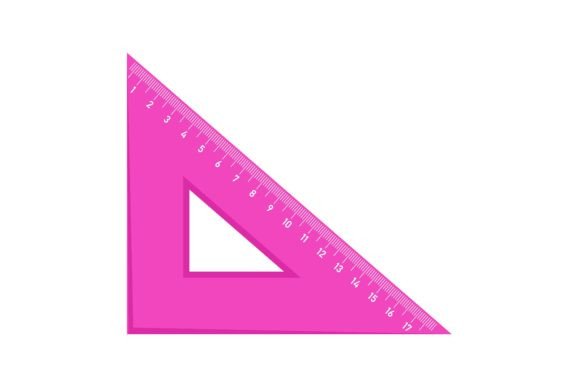
In the vast digital library of educational resources, few images are as universally recognized as the school plastic ruler triangle vector illustration. At first glance, it appears to be a simple graphic: a transparent blue or clear triangular tool, often accompanied by a straight edge, isolated against a pristine white background. However, this image represents far more than just clipart. It is a powerful symbol of precision, foundational learning, and the intersection of mathematics and physics in everyday education. Whether you are a teacher designing a curriculum, a student grappling with geometry, or a designer creating educational materials, understanding the significance of this visual element can deepen your appreciation for the tools that shape our scientific literacy.
More Than Just Clipart: The Symbolism of Mathematical Equipment
When we search for terms like mathematics equipment for experiments isolated on white background, we are often looking for clarity. The white background serves a specific design purpose: it removes distraction, allowing the viewer to focus entirely on the object’s form and function. In an educational context, this isolation mirrors the way we teach complex concepts—by breaking them down into their purest forms.
The triangle ruler, technically known as a set square, is not merely a drawing aid. It is a physical manifestation of geometric principles. The most common versions are the 45-45-90 degree triangle and the 30-60-90 degree triangle. These specific angles are not arbitrary; they are the building blocks of trigonometry and engineering. By featuring these tools in vector illustrations, educators and designers highlight the importance of accuracy. A vector illustration ensures that no matter how much the image is scaled up for a classroom poster or scaled down for a mobile app icon, the lines remain crisp and the angles remain true. This digital precision parallels the physical precision required in scientific experiments.
The Role of Physics and Science in Everyday Tools
While often associated strictly with mathematics, the plastic ruler and triangle are equally vital to the study of physics and general science. In physics labs, measurement is everything. Before students can understand velocity, acceleration, or force, they must understand distance and direction. The ruler provides the linear measurement, while the triangle helps establish perpendicularity and parallel lines—concepts crucial for drawing free-body diagrams or mapping vector forces.
Consider a practical example: a student tasked with plotting the trajectory of a projectile. They need to draw a coordinate system. Using a plastic triangle ensures that the Y-axis is perfectly perpendicular to the X-axis. If this angle is off by even a few degrees, the resulting calculations regarding gravity and motion will be flawed. Thus, this simple piece of plastic becomes a gateway to understanding the laws of the universe. It teaches the discipline of exactness, a trait that is invaluable not only in science but in all professional fields.
Bridging Traditional Learning and Digital Design
The transition from physical classrooms to digital learning environments has changed how we interact with educational tools. The school plastic ruler triangle vector illustration acts as a bridge between these two worlds. For decades, every student had a physical set of these tools in their pencil case. Today, while many calculations are done via software, the visual language of education remains rooted in these traditional icons.
Designers use these vector assets to create intuitive user interfaces for educational apps. When a user sees a triangle ruler icon, they immediately understand that the feature involves measurement, drawing, or geometry. This instant recognition reduces the cognitive load for learners. It leverages existing knowledge to facilitate new learning. Furthermore, in remote learning scenarios, where teachers share screens rather than physical objects, high-quality vector graphics ensure that instructional materials remain legible and professional.
- Scalability: Vector files allow images to be resized without losing quality, essential for responsive web design.
- Clarity: Clean lines and isolated backgrounds help focus attention on key educational concepts.
- Versatility: These illustrations can be used in textbooks, presentations, websites, and video tutorials.
Common Misunderstandings About Educational Graphics
A common assumption is that stock illustrations of school supplies are generic and lack pedagogical value. Critics might argue that a digital image cannot replace the tactile experience of holding a ruler. While it is true that hands-on learning is critical, especially for younger children developing fine motor skills, digital representations serve a different but equally important purpose. They provide a standardized reference point.
Another misunderstanding is that these tools are obsolete in the age of computer-aided design (CAD). On the contrary, understanding the manual use of a triangle and ruler builds spatial reasoning skills that are difficult to develop solely through mouse clicks. When students manually draw a perpendicular line, they internalize the concept of orthogonality. The vector illustration serves as a reminder of this foundational skill, encouraging educators to blend digital efficiency with traditional understanding.
Practical Relevance in Business and Creativity
Beyond the classroom, the imagery of the ruler and triangle has permeated business and creative sectors. In project management, "measuring progress" is a common metaphor. In architecture and interior design, precision is the product. The education concept represented by these tools extends into professional development. Companies often use these symbols in training materials to denote modules focused on analytics, structural planning, or strategic alignment.
For creatives, the aesthetic of the transparent plastic ruler—often depicted with subtle reflections and measurement markings—evokes a sense of order and professionalism. It suggests that the content being presented is well-researched and carefully structured. Whether used in a infographic about financial growth or a blueprint for a new product, the ruler triangle signals reliability.
- Identify the Context: Determine if the image is for a math lesson, a physics experiment, or a business presentation.
- Choose the Right Style: Flat design works well for modern apps, while realistic vectors suit detailed textbooks.
- Maintain Consistency: Ensure the illustration style matches other educational assets in your material.
- Highlight Key Features: Use color or emphasis to draw attention to specific angles or measurements if necessary.
Building a Broader Understanding of Educational Tools
To truly appreciate the school plastic ruler triangle vector illustration, one must view it as part of a larger ecosystem of learning aids. It does not exist in isolation. It is often paired with protractors, compasses, and graph paper. Together, these tools form the toolkit of logical thinking. They teach us that the world can be measured, analyzed, and understood.
In conclusion, this seemingly simple graphic is a cornerstone of educational communication. It embodies the principles of physics, science, and mathematics while serving as a versatile asset in modern digital design. By recognizing its symbolic weight and practical utility, educators, designers, and learners can better utilize these resources to foster a deeper understanding of the world around them. Whether isolated on a white background or integrated into a complex diagram, the ruler and triangle remain timeless symbols of the quest for knowledge and precision.
For those interested in exploring more about educational design resources, consider visiting educational asset libraries or reviewing guidelines on visual learning strategies. Understanding the tools we use to teach is the first step in improving how we learn.