School Student Characters: Students with Books and Backpacks for Engaging Educational Design
In the rapidly evolving landscape of educational content creation, visual storytelling has become a cornerstone of effective communication. Whether you are designing a curriculum for elementary education, developing an e-learning module, or creating marketing materials for a school supply brand, the imagery you choose speaks volumes before a single word is read. This is where high-quality School Student Characters. Students with books and backpacks play a pivotal role. These assets are not merely decorative; they are functional tools that bridge the gap between abstract concepts and relatable human experiences for young learners.
For educators, graphic designers, and content creators, finding the right visual representation of students is often a challenge. The market is saturated with generic clip art that lacks personality or cultural relevance. However, a decent vector set featuring cartoon children, isolated girl and boy teens, and elementary-aged students offers a versatile solution. By utilizing illustrations of boys and girls with backpacks in formats like EPS and JPG, creators can build narratives that resonate with their audience, fostering engagement and improving information retention.
Understanding the Value of Character-Based Visuals
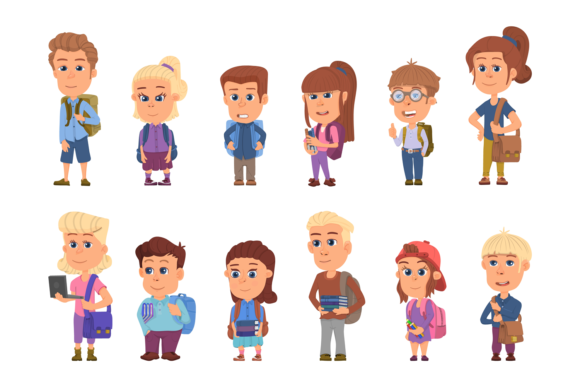
When we discuss School Student Characters. Students with academic essentials, we are referring to a specific niche of digital illustration designed to reflect the daily reality of learners. These characters are typically depicted in action—carrying heavy backpacks, holding textbooks, or interacting with peers. The inclusion of props like books and backpacks is crucial because it immediately contextualizes the scene within an educational framework.
The primary goal of using these characters is to create an emotional connection. Children and teenagers are more likely to engage with material that features protagonists who look like them and face similar challenges. For instance, an illustration of a student struggling with a heavy backpack can subtly communicate themes of resilience or the importance of organization. Conversely, a cheerful teen with a neatly packed bag might represent preparedness and success. These visual cues help adults convey complex educational values without relying solely on text.
Addressing Common Design Challenges
Many content creators face significant hurdles when sourcing educational imagery. One major issue is consistency. It is difficult to find a cohesive set of characters that maintain the same artistic style across different age groups and activities. Another challenge is flexibility. Raster images often lose quality when resized, making them unsuitable for large-format prints or high-resolution digital displays.
This is why opting for a decent vector set is a strategic decision. Vector files, such as EPS, allow for infinite scalability without pixelation. This means you can use the same illustration of a boy and girl with backpacks on a small mobile app icon and a large classroom poster without compromising quality. Furthermore, isolated characters provide maximum flexibility. By removing the background, designers can place these students into any environment, from a vibrant classroom to a minimalist website header, ensuring the visual aligns perfectly with the brand’s aesthetic.
Practical Applications in Educational Content
The utility of School Student Characters. Students with diverse accessories extends far beyond simple decoration. Here are several practical ways these assets can be implemented to enhance educational projects:
- E-Learning Modules: Use cartoon children to guide users through interactive lessons. A character holding a book can introduce a reading segment, while a teen with a backpack might signal the end of a module or a transition to a new topic.
- Textbook and Worksheet Design: Break up dense text with relevant illustrations. An isolated girl or boy can serve as a visual anchor for sidebars, tips, or important definitions, making the material less intimidating for elementary students.
- School Marketing Materials: Brochures, newsletters, and websites benefit from friendly, approachable imagery. Using high-quality JPGs of smiling students creates a welcoming atmosphere for parents and prospective students.
- Gamification Elements: In educational apps, characters can represent user avatars or rewards. Unlocking a new backpack design or book accessory can motivate students to complete tasks.
Tailoring Content for Different Age Groups
One size does not fit all in educational design. The way you utilize School Student Characters. Students with specific traits should vary depending on the target demographic. For elementary education, the focus should be on bright colors, exaggerated expressions, and simple shapes. Cartoon children in this category should appear approachable and fun, helping to reduce anxiety around learning new subjects.
For older audiences, such as middle and high schoolers, the approach shifts. Isolated girl and boy teens should be depicted with more realistic proportions and contemporary styling. Their backpacks and books should reflect current trends, making the content feel relevant and respectful of their maturity. Using outdated or overly childish imagery for teens can lead to disengagement, so selecting a vector set that offers age-appropriate variations is essential.
Technical Considerations for Implementation
To get the most out of your digital assets, understanding file formats is key. While JPGs are convenient for web use due to their smaller file size and universal compatibility, they are raster-based and do not scale well. Therefore, it is advisable to keep the original EPS files for any design work that may require resizing or editing. EPS files allow you to change colors, adjust lines, and modify elements to match your specific brand guidelines.
Additionally, consider the concept of "isolated" characters. These are images where the subject is separated from the background, usually with a transparent layer. This feature saves time during the design process, as you do not need to manually remove backgrounds or worry about clashing colors. It allows for seamless integration into various layouts, ensuring that the School Student Characters. Students with books remain the focal point of the design.
Enhancing Inclusivity and Representation
Modern educational materials must reflect the diversity of the student body. A high-quality vector set should include a range of ethnicities, abilities, and gender expressions. When selecting illustrations of boys and girls with backpacks, look for sets that offer variety in skin tones, hair textures, and clothing styles. This inclusivity ensures that every student can see themselves represented in the learning materials, which is proven to boost confidence and engagement.
Moreover, representing different types of learners—such as students with glasses, hearing aids, or other visible differences—normalizes these experiences and fosters a more inclusive classroom culture. By carefully curating your School Student Characters. Students with diverse attributes, you contribute to a more equitable educational environment.
Conclusion
Incorporating well-designed visuals into educational content is not just an aesthetic choice; it is a pedagogical strategy. School Student Characters. Students with books and backpacks provide a powerful way to humanize learning materials, making them more accessible and engaging for students of all ages. By leveraging the flexibility of vector sets, understanding the nuances of different age groups, and prioritizing inclusivity, designers and educators can create resources that truly resonate.
Whether you are updating a school website, designing a new textbook, or creating an interactive app, investing in high-quality, isolated illustrations of cartoon children and teens is a step toward more effective communication. These assets serve as silent ambassadors of learning, guiding students through their educational journey with clarity, warmth, and relevance. As you move forward with your projects, remember that the right image can transform a mundane lesson into an inspiring experience.